Credit Notes in the UK: Meaning, Example and How to Issue One
The correct way to amend or reverse an invoice - including UK legal requirements and VAT implications.
Credit note or refund?
A credit note records a reduction to an earlier invoice. A refund returns money already paid. You may need both, but issuing the document does not itself send money to the customer.
Use a credit note for a genuine correction, return or agreed reduction. Keep the original invoice and clearly explain what changed.
Worked example: a £120 partial credit
An unpaid invoice is £600: £500 for the work plus £100 VAT at 20%. You agree to remove £100 of work plus its £20 VAT. Credit note CN-0001 references the original invoice and credits £120, leaving £480 payable.
This example assumes an ordinary 20% VAT supply and no earlier payments or credits. If the customer has already paid, agree how to return or apply the credit. A non-VAT-registered business must not add a VAT amount.
What Is a Credit Note?
A credit note is a document that reduces or cancels the amount a client owes on a previously issued invoice. It's the formal way to correct invoicing errors, process returns, or adjust prices after an invoice has been sent.
You should never delete or edit an invoice that has already been sent. Instead, issue a credit note and (if needed) raise a new corrected invoice. This keeps your records accurate and audit-ready.
When to Issue a Credit Note
- 🔄 Goods returned - the client returns products and needs a refund or credit against their account.
- 🔄 Invoice error - wrong amount, incorrect description, or duplicate invoice.
- 🔄 Price adjustment - a retrospective discount, early-payment rebate, or renegotiated rate.
- 🔄 Service not delivered - part of the invoiced work was not completed.
- 🔄 Cancellation - the order or project was cancelled after invoicing.
What Must a UK Credit Note Include?
- ✅ The words "Credit Note"
- ✅ A unique credit note number (sequential, separate from invoice numbers)
- ✅ Date of issue
- ✅ Your business name, address, and VAT number (if registered)
- ✅ The client's name and address
- ✅ Reference to the original invoice (invoice number and date)
- ✅ Reason for the credit
- ✅ Amount credited (with VAT breakdown if applicable)
- ✅ The net effect on the outstanding balance
VAT Implications of Credit Notes
If you're VAT-registered, check the original supply and the reason for the correction before adjusting your records:
- 📊 Check the VAT amount and rate against the original supply; do not simply use today's default rate.
- 📊 Check the accounting period. A credit note may require a VAT adjustment, but the accounting period depends on the reason for the correction and when the price changes or refund is paid. An error already declared on a VAT Return follows HMRC's error-correction rules. Do not assume the credit-note issue date alone determines the VAT period.
- 📊 Keep the credit note for at least 6 years as part of your VAT records.
See HMRC VAT Notice 700, section 18 for the credit-note details and adjustment rules. Confirm uncertain or tax-sensitive corrections with your accountant. Creating a document in Experi does not submit a correction to HMRC.
⚠️ Important VAT Note
Your client must also adjust their input VAT to match the credit note. If you're issuing a credit note to a VAT-registered client, ensure they receive a copy for their records.
Full vs Partial Credit Notes
You can issue a credit note for the full invoice amount (a complete reversal) or for a specific portion:
Full Credit Note
Cancels the entire invoice. Use when the whole order is returned, the project is cancelled, or the invoice was issued in error. The balance owed becomes zero.
Partial Credit Note
Reduces the invoice by a specific amount. Use when one line item is returned, a discount is applied, or part of the work wasn't completed. The remaining balance stays payable.
Frequently Asked Questions
What is a credit note?
A credit note reduces or cancels the amount owed on a previous invoice. It's the formal way to correct errors, handle returns, or apply discounts after an invoice has been issued.
Should I delete an invoice or issue a credit note?
Never delete a sent invoice. Issue a credit note against it instead, then raise a new corrected invoice if needed. This maintains a proper audit trail.
How does a credit note affect VAT?
A credit note may require a VAT adjustment, but the accounting period depends on the reason for the correction and when the price changes or refund is paid. An error already declared on a VAT Return follows HMRC's error-correction rules. Do not assume the credit-note issue date alone determines the VAT period.
What must a UK credit note include?
The words "credit note", a unique number, date, business details, client details, reference to the original invoice, reason for the credit, the amount credited with VAT breakdown, and the net balance effect.
Can I issue a partial credit note?
Yes. You can credit any portion of the original invoice - for example, refunding one line item while leaving the rest payable. Clearly state which items are being credited.
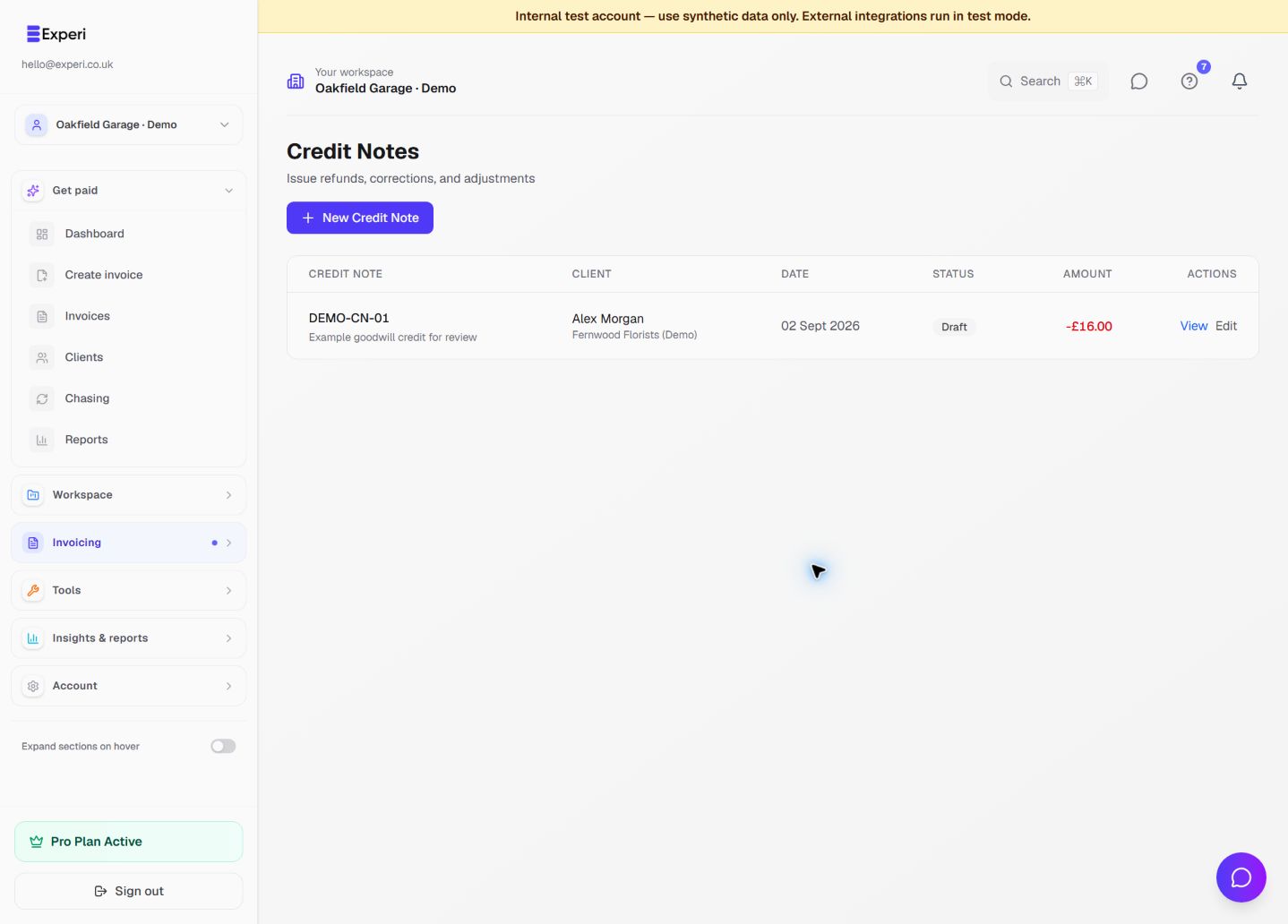
Prepare and review a credit note in Experi
Keep the correction alongside your invoicing records, with a draft to review before you issue it.
- Review the original invoice, then create a credit-note draft for the correct client and link the invoice where applicable.
- Check the reason, line items, amounts and tax treatment. A partial credit should describe exactly what is being corrected.
- Review and issue the document, then download the PDF to share. Record any refund separately and check the remaining invoice balance.