

Sole Trader Invoicing Made Simple
Create invoices with sequential numbering, VAT support, and automatic payment reminders. Built specifically for UK sole traders.
Why Choose Experi?
UK Invoice Details From Day One
Sequential invoice numbering, VAT support, and the essential fields for UK invoices, with a straightforward setup.
Tax Return Made Easy
Every invoice tracked and organised. When Self Assessment time comes, your records are already in order.
Chase Payments Automatically
Automated email reminders mean you never have to awkwardly ask a client to pay. They get a polite nudge, you get paid faster.
Inside Experi
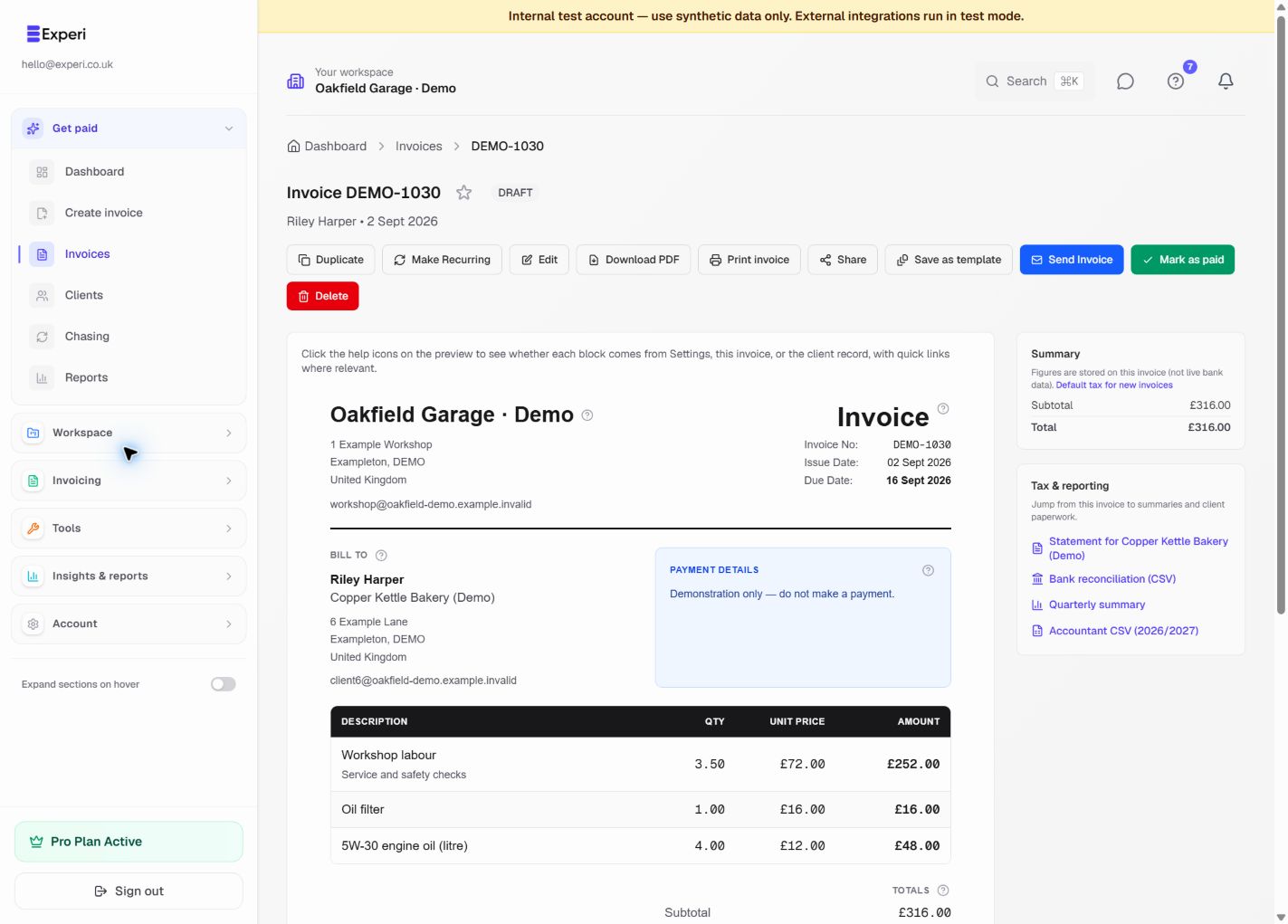
Your invoice, ready to review.
See the line items, payment details and amount due before you send. Reuse your services and parts, then download or print a customer copy when you need one.
Try the invoice preview without an account“I've been freelance for just over a year now and Experi has made invoicing so much easier. It's really simple to use, I can save all of my different clients in one place and creating invoices only takes a couple of minutes.”
Perfect For
Key Features
Frequently Asked Questions
Do I need to register for VAT as a sole trader?
You must register for VAT if your annual turnover exceeds £90,000. You can also register voluntarily if you're under the threshold. Once registered, you must charge 20% VAT on invoices and include your VAT number.
What information must be on a sole trader invoice?
You must include: your full name (as on Self Assessment), business address, invoice number, invoice date, client name and address, description of goods/services, amount charged, and payment terms. If VAT registered, also include VAT number and VAT amount.
Do invoice numbers have to be sequential?
Yes, HMRC requires sequential invoice numbers. Never skip numbers or reuse old ones. A common format is INV-000001, INV-000002, etc. Experi automatically generates sequential invoice numbers for you.
How long should I keep invoices as a sole trader?
HMRC requires you to keep all business records, including invoices, for at least 5 years after the 31 January submission deadline of the relevant tax year. Digital copies are acceptable and often safer than paper.
What payment terms should I use?
Common payment terms for sole traders are 14 or 30 days. Be clear: 'Payment due within 14 days' or 'Payment due by [specific date]'. The Late Payment of Commercial Debts Act gives you the right to charge interest on late payments.
Get Back to the Work You Love
Spend less time on invoicing and more time doing what you're great at.
No credit card required • Start invoicing in under 60 seconds