

Stop Chasing Stage Payments. Get Paid Automatically.
Managing 5 projects with different payment schedules? Experi handles it all. Create professional stage payment invoices, track retentions, and send automatic payment reminders. Focus on building, not bookkeeping.
Why Choose Experi?
Multi-Project Management
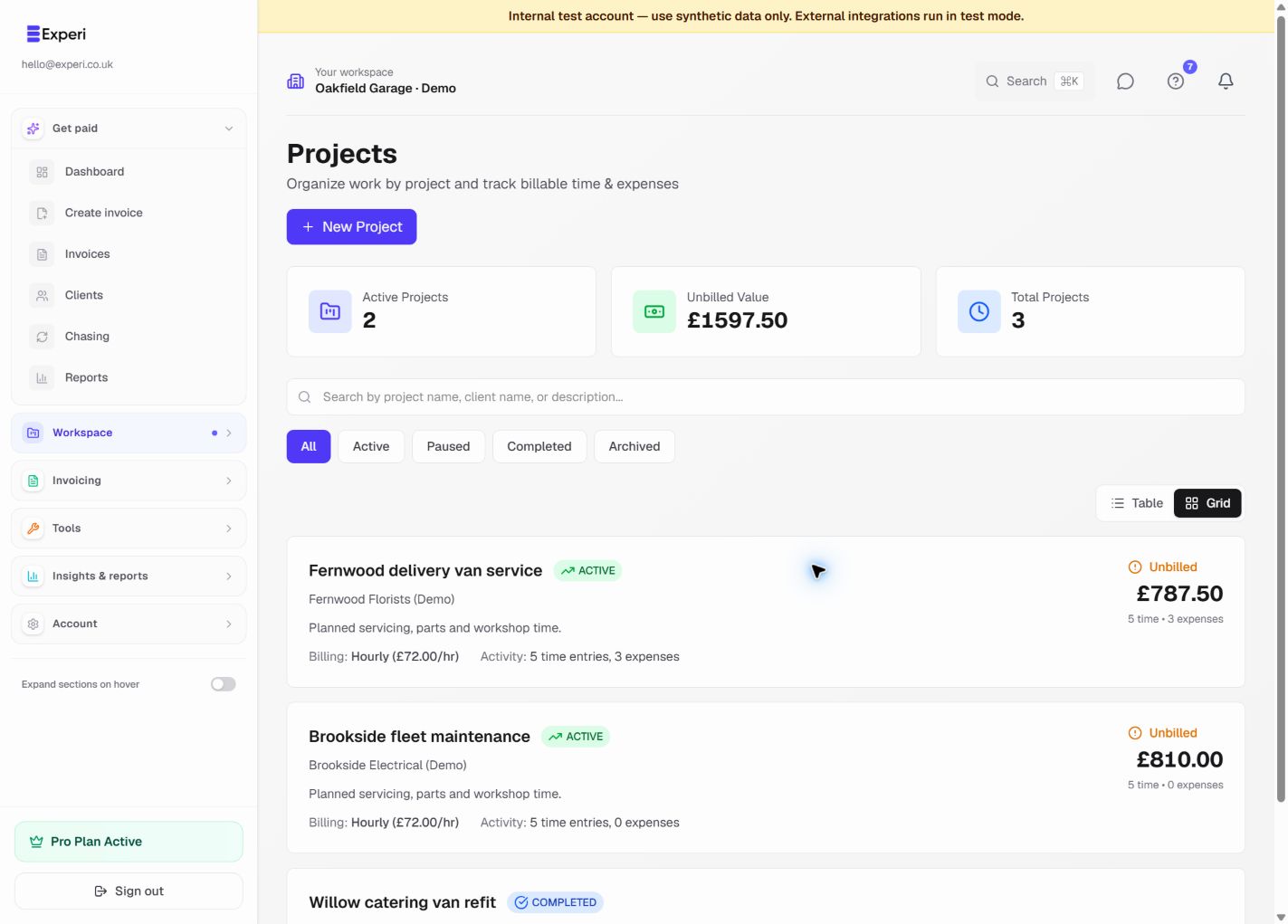
Track invoices across all your projects in one place. See at a glance which jobs are profitable, which clients haven't paid, and where your cash flow is tight. Essential for growing building businesses.
Detailed Stage Payment Invoices
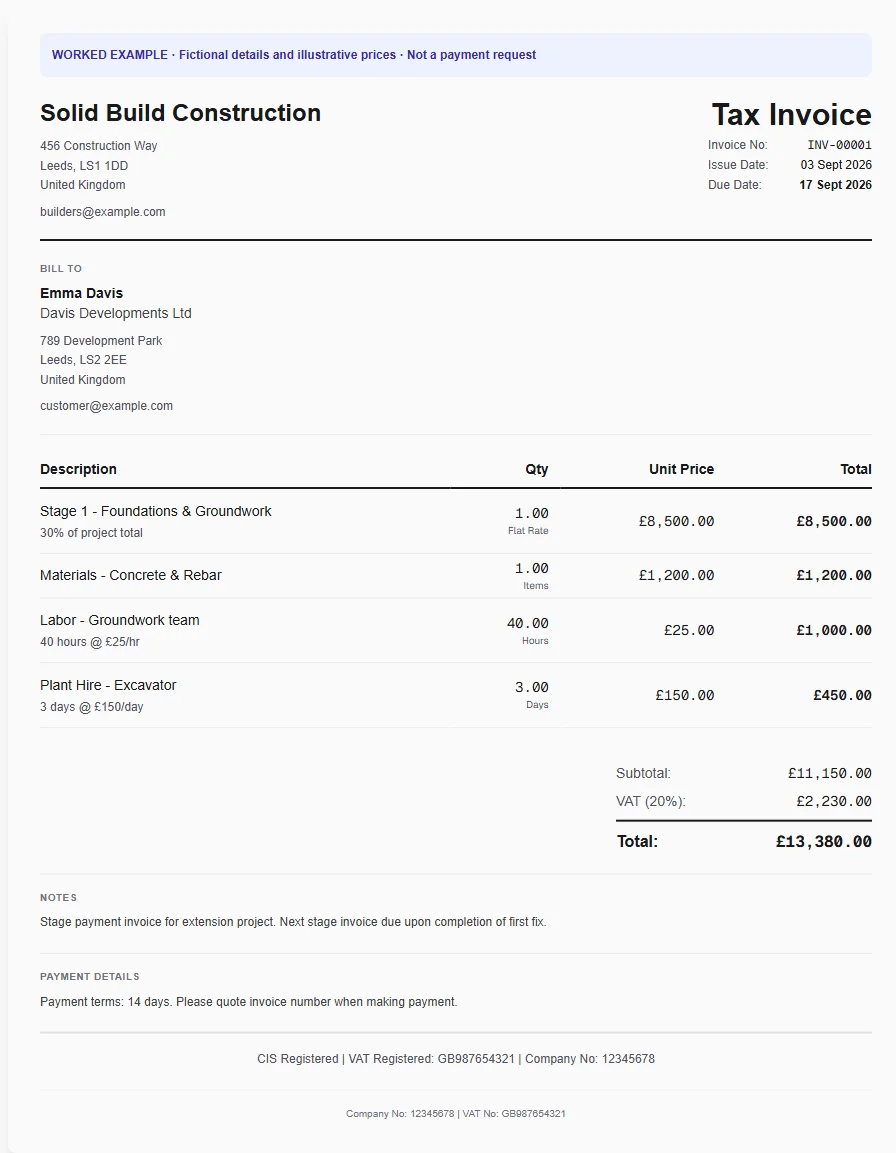
Create professional invoices showing foundation work, first fix, second fix, and completion. Include materials, subcontractor costs, plant hire - everything itemized properly for your clients and their quantity surveyors.
Track Retentions & Get Paid
Don't lose track of 5% retentions on multiple projects. Experi helps you remember when retention periods end and automatically reminds clients. That's money you've already earned - make sure you claim it.
From job to customer invoice
An invoice workflow for builders
A small building job combines labour, materials and hired equipment. The client needs the invoice to identify the site and stage of work without mistaking it for the full project price.
Identify the stage
Select the builder template and name the work being billed in the invoice title and Notes. Use your agreed quantities or fixed amounts, not the example rates.
Keep the cost lines clear
Separate labour, materials and equipment hire. Save repeated line structures as your own template, but review quantities and any VAT or CIS settings for each job.
Review before issuing
Check earlier invoices so a stage is not billed twice. Preview the customer copy and send or print when ready; the standard template does not automatically reconcile previous stage payments.
Preselected, never automatically applied. Enter your own prices and review the client, dates and tax settings.
Before you invoice: Do not treat a stage invoice as the whole contract balance. Templates do not decide whether CIS or domestic reverse-charge VAT applies.
The tools behind this workflow
Explore the tools behind this workflow. Templates and inventory are free capabilities; document allowances apply. Time tracking, recurring invoices and automated chasing require Pro.
Perfect For
Key Features
Frequently Asked Questions
How do I invoice for stage payments on building projects?
Create separate invoices for each stage (foundations, first fix, second fix, completion). Each invoice should clearly state the stage, percentage of work completed, and materials used. Experi lets you track all stage payments per project in one place.
What should I include on invoices for CIS (Construction Industry Scheme)?
Include your CIS registration number, the client's CIS number if applicable, and clearly separate labor and materials. CIS deductions apply to labor only, so clear separation is essential for compliance.
How do I track retentions on multiple projects?
Experi helps you track retentions by project. Set the retention percentage (typically 5%) and the release date. The system will remind you when retention periods end so you don't forget to claim money you've already earned.
Should I invoice for materials separately from labor?
Yes, always separate materials, labor, and subcontractor costs. This helps with CIS compliance, makes invoices clearer for clients, and helps with your accounting. Many clients and quantity surveyors require this breakdown.
What payment terms are standard for building work?
Stage payments are common - invoice after each completed stage. Final payment terms are typically 14-30 days after completion. For larger projects, you might agree 30-day terms. Always include payment terms clearly on every invoice.
Get Back to the Work You Love
Spend less time on invoicing and more time doing what you're great at.
No credit card required • Start invoicing in under 60 seconds