

You Wire Buildings. We Wire Payments.
You've done the work - now get paid without the paperwork. Create professional invoices in under 60 seconds, send them before you leave site, and let automatic reminders chase the money so you don't have to.
Why Choose Experi?
Invoice Emergency Work Instantly
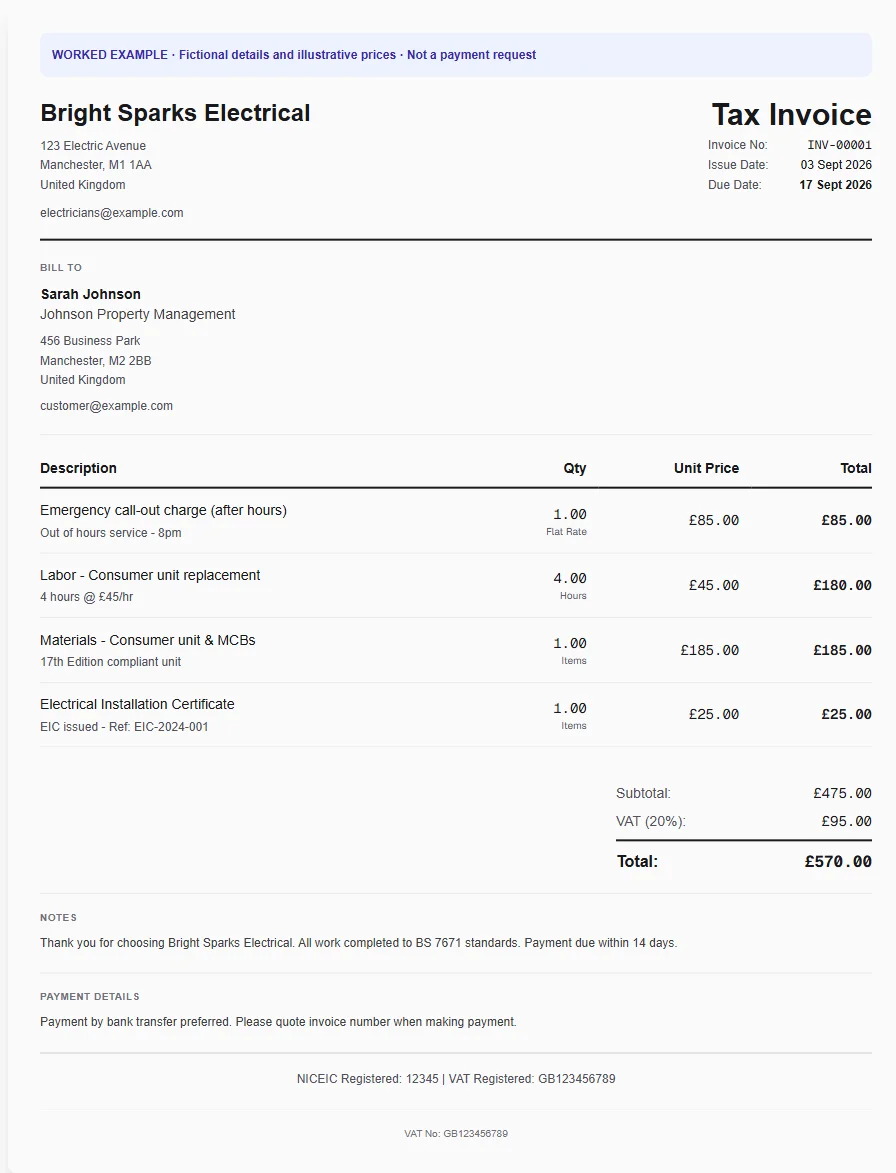
Finish an emergency call-out? Create and email the invoice before you leave the property. Include call-out charges, labor hours, and materials used - all itemized professionally.
Look Professional, Get Paid Faster
Include your NICEIC/NAPIT registration, VAT number, and certification references. Clients trust professional invoices and pay them quicker. Add payment terms that protect your business.
Never Chase Payments Again
Automatic payment reminders mean you don't have to awkwardly chase clients. Set it once, and Experi sends polite reminders for overdue invoices automatically.
From job to customer invoice
An invoice workflow for electricians
A consumer-unit replacement has a call-out, several hours of labour, supplied equipment and a separate certification line. The customer needs to recognise the property and understand what each charge covers.
Carry over the agreed scope
Start from the electrical template and match the descriptions to the accepted work. Replace example quantities with your actual hours and materials; a template does not certify an installation.
Recall frequently supplied items
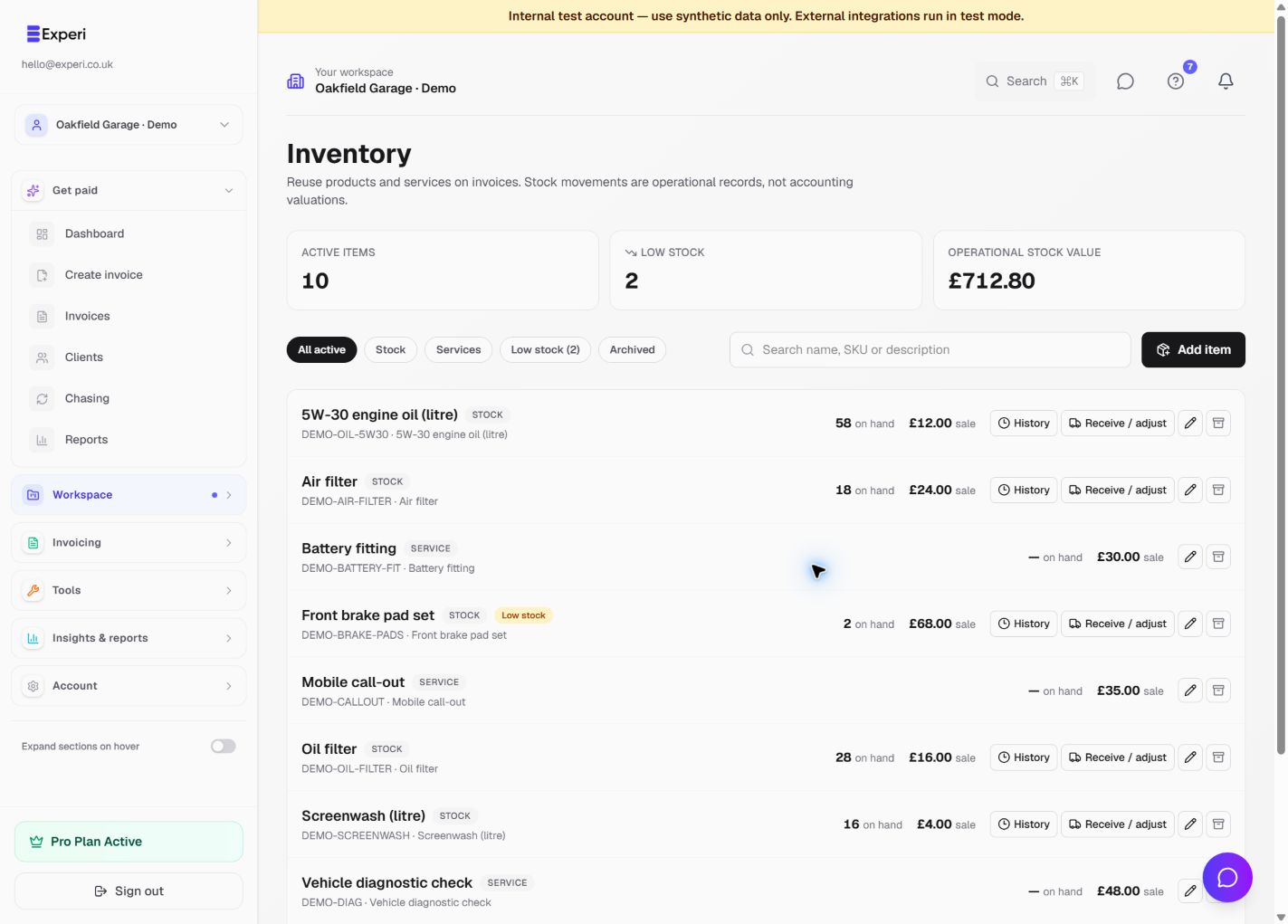
Keep repeat labour rates as services and commonly sold parts as stock items. Search Inventory by name or SKU instead of retyping equipment descriptions on each invoice.
Make the job traceable
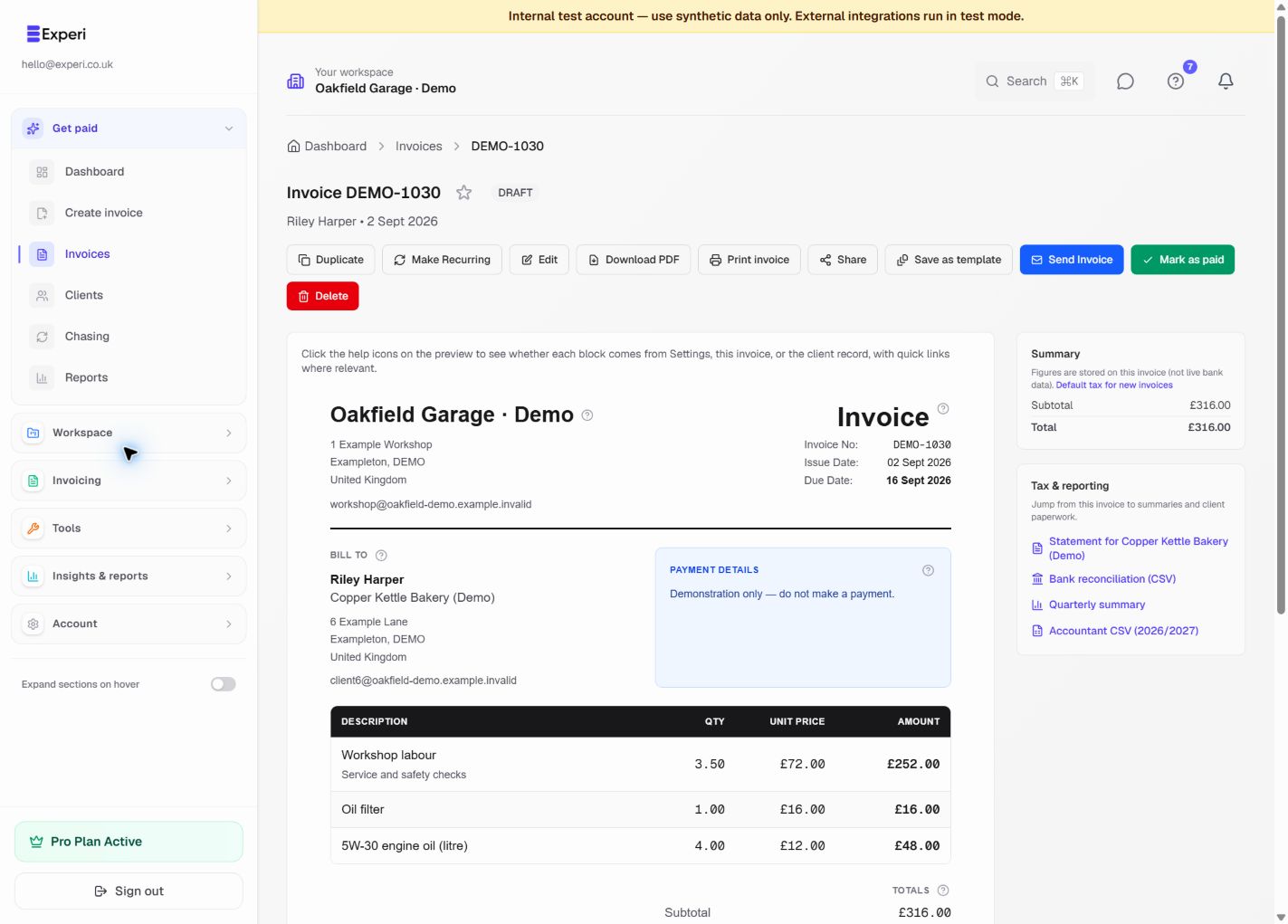
Add the site and any issued certificate reference in Notes. Review the customer copy before sending or printing, then use Chasing to find unpaid invoices when the due date passes.
Preselected, never automatically applied. Enter your own prices and review the client, dates and tax settings.
Before you invoice: Do not copy an example accreditation, certificate number or compliance statement onto a real job. Check any VAT or CIS treatment separately for the actual supply.
The tools behind this workflow
Explore the tools behind this workflow. Templates and inventory are free capabilities; document allowances apply. Time tracking, recurring invoices and automated chasing require Pro.
Perfect For
Key Features
Frequently Asked Questions
Do I need to include my NICEIC/NAPIT registration number on invoices?
While not legally required, including your registration number builds trust with clients and can help with payment. Many clients prefer to work with registered electricians, so displaying your credentials on invoices reinforces your professionalism.
How should I invoice for emergency call-out charges?
Itemize emergency call-out charges separately from labor and materials. Common practice is to charge a fixed call-out fee (e.g., £50-£100) plus hourly labor and any parts used. Make this clear on your invoice so clients understand the breakdown.
Can I invoice for stage payments on large rewiring jobs?
Yes! For large projects, you can create separate invoices for different stages (e.g., first fix, second fix, testing). Experi lets you track multiple invoices per project and set different payment terms for each stage.
What payment terms should electricians use?
Most electricians use 14-30 day payment terms. For emergency work, consider shorter terms (7-14 days). For large commercial projects, 30 days is standard. Always include payment terms clearly on every invoice.
Do I need to charge VAT on electrical work?
You only need to charge VAT if you're VAT registered (turnover over £90,000). If you're not registered, don't charge VAT. If you are registered, you must charge 20% VAT and include your VAT number on invoices.
Get Back to the Work You Love
Spend less time on invoicing and more time doing what you're great at.
No credit card required • Start invoicing in under 60 seconds