

Invoice Payment Terms Examples (Net 7/14/30)
Understanding payment terms for UK invoices. Learn about Net 7, Net 14, Net 30, and other common terms with real examples.
What do Net 7, Net 14 and Net 30 mean?
They mean payment is due 7, 14 or 30 calendar days after the invoice date, unless your agreement specifies another starting point. State the actual due date too, so the customer does not have to calculate it.
Example wording: Payment due within 14 days of the invoice date, by 15 September 2026. Please use the invoice number as your payment reference.
| Term | Due date | Wording to use |
|---|---|---|
| Net 7 | 8 September 2026 | Payment due within 7 days of the invoice date. |
| Net 14 | 15 September 2026 | Payment due within 14 days of the invoice date. |
| Net 30 | 1 October 2026 | Payment due within 30 days of the invoice date. |
Payment terms tell clients when payment is due. Clear terms help you get paid faster and avoid disputes. This guide explains common UK payment terms with examples you can use.
What Are Payment Terms?
Payment terms specify when a client must pay an invoice. They're usually written as "Net X" where X is the number of days from the invoice date, or as a specific due date.
Common Payment Terms Explained
Net 7 (Payment Due in 7 Days)
Payment is due 7 days after the invoice date. Best for:
- • Small jobs and one-off work
- • New clients (until trust is established)
- • Emergency or urgent work
- • Retail or consumer clients
Example: "Payment terms: Net 7 (payment due within 7 days of invoice date)"
Invoice dated: 1st January → Payment due: 8th January
Net 14 (Payment Due in 14 Days)
Payment is due 14 days after the invoice date. Best for:
- • Most UK sole traders and freelancers
- • Regular clients with good payment history
- • Service-based businesses
- • Small to medium projects
Example: "Payment terms: Net 14 days"
Invoice dated: 1st January → Payment due: 15th January
Net 30 (Payment Due in 30 Days)
Payment is due 30 days after the invoice date. Best for:
- • Established business clients
- • Large projects or contracts
- • B2B transactions
- • Clients with monthly payment cycles
Example: "Payment terms: Net 30 (payment due within 30 days)"
Invoice dated: 1st January → Payment due: 31st January
Due on Receipt / Immediate Payment
Payment is due immediately upon receiving the invoice. Best for:
- • Emergency work
- • Small amounts (under £100)
- • One-off consumer work
- • Clients with poor payment history
Example: "Payment due on receipt" or "Payment due immediately"
Specific Due Date
Payment is due on a specific date, regardless of invoice date. Best for:
- • Monthly retainer clients
- • Clients who pay on specific dates
- • Recurring invoices
Example: "Payment due by 25th of each month"
How to Write Payment Terms on Invoices
Be clear and specific. Good examples:
- ✅ "Payment terms: Net 14 days (payment due by [DATE])"
- ✅ "Payment due within 14 days of invoice date"
- ✅ "Payment due by: [SPECIFIC DATE]"
- ✅ "Payment terms: Net 30. Late payment interest applies after due date."
Avoid vague terms like:
- ❌ "Payment due soon"
- ❌ "Pay when convenient"
- ❌ "Payment due ASAP"
Late Payment Rights (UK)
For eligible business-to-business debts, the Late Payment of Commercial Debts Act may allow:
- • Statutory interest: 8% per year plus Bank of England base rate
- • Fixed compensation: £40-£100 depending on invoice amount
- • Reasonable debt recovery costs
Check the contract and eligibility before claiming; consumer invoices follow different rules and a contractual interest provision can affect the statutory route. Agree your terms before the work starts rather than adding new conditions after a dispute.
Read the GOV.UK payment obligations guidance and our late-payment interest guide.
Choosing the Right Payment Terms
Consider:
- 💼 Client type: Consumers vs businesses have different expectations
- 💼 Invoice amount: Larger invoices often have longer terms
- 💼 Payment history: Shorter terms for clients who pay late
- 💼 Industry standard: What do others in your trade use?
- 💼 Cash flow needs: How quickly do you need the money?
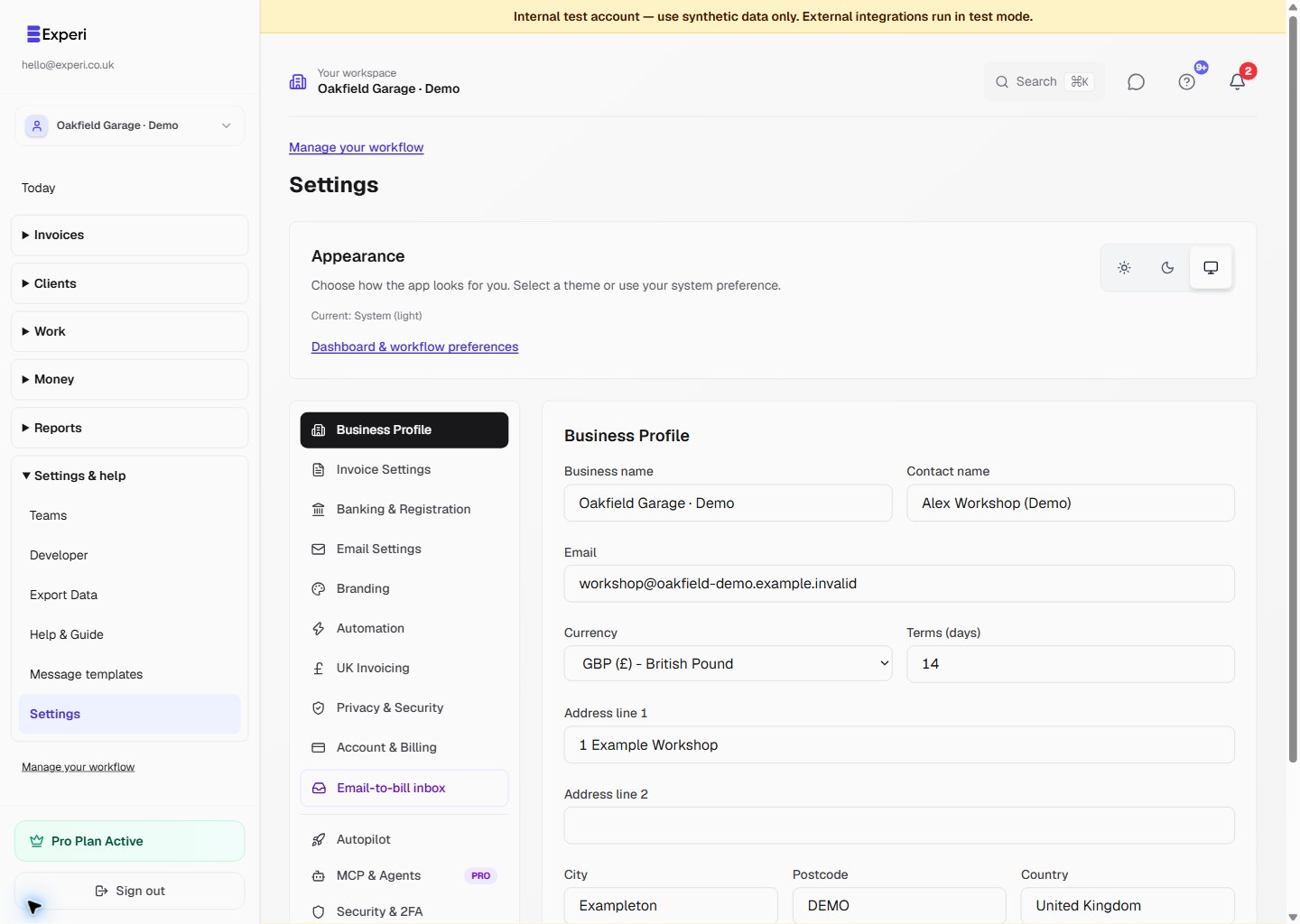
Setting Payment Terms in Experi
Experi makes it easy to set and manage payment terms:
- ✨ Default terms: Set your preferred terms once, apply to all invoices
- ✨ Per-invoice terms: Override defaults for specific clients
- ✨ Automatic due dates: Calculated from invoice date
- ✨ Payment reminders: Configure follow-up on Pro after checking your account's sending approval
Set the terms once, check each due date
Save your usual payment terms in business settings, then review the actual due date and payment instructions on each invoice.
- Agree the terms with your customer before the work starts. Use an explicit due date as well as any Net 7, Net 14 or Net 30 wording.
- Save your usual terms in Business Profile and reusable payment instructions in Invoice Settings.
- Create a draft and check the dates, currency and payment details before sending or printing it.
Summary
Clear payment terms reduce ambiguity. Choose terms that you and your customer agree work for the job. Always state terms clearly on invoices, and know your rights for late payments.