

How to Write a Letter Before Action for Unpaid Invoices
A formal demand that explains the debt, gives the recipient a fair opportunity to respond, and prepares the ground for a possible court claim.
Can I send a physical Letter Before Action?
Yes. First check which pre-action process applies. The Debt Claims Protocol generally requires posting the letter, unless the recipient has explicitly requested another method. Keep the final letter, required enclosures and evidence of sending.
On Experi Pro, choose Escalate chasing on an overdue invoice. Edit and approve a letter in the app, download its PDF or print directly, then record sending details and attach proof of posting. Experi does not post letters or submit court claims. Check the applicable requirements and any additional enclosures before sending.
What Is a Letter Before Action?
A Letter Before Action (LBA) - also called a Letter Before Claim - is a formal written notice to a debtor that you intend to issue court proceedings if the outstanding debt is not paid. It is the usual final written step before legal action.
The Pre-Action Protocol for Debt Claims applies when a business creditor, including a sole trader, claims a debt from an individual, including a sole trader. Claims against companies and other business disputes normally follow the Practice Direction on Pre-Action Conduct or another applicable protocol. Check which process applies before sending the letter.
⚠️ Why You Must Not Skip This Step
The court can take failure to follow the applicable pre-action process into account when managing the case and deciding costs or interest. A 30-day reply period is specifically required where the Debt Claims Protocol applies; other cases may use a different timetable.
Why a Letter Before Action Matters
An LBA makes the issue and the proposed next step unambiguous. It gives the recipient a final opportunity to pay, explain a dispute or propose a realistic payment plan before court proceedings are considered.
- 🔹 It demonstrates you're serious - not just sending another reminder
- 🔹 It triggers the debtor's awareness of court costs and a possible CCJ on their credit file
- 🔹 It specifies the exact amount including interest, making the total cost of non-payment clear
- 🔹 A clear, applicable response deadline creates urgency
What Must Be Included in an LBA
Start by identifying the pre-action process that applies. The Debt Claims Protocol has specific content and enclosure requirements for business creditors claiming from individuals, including sole traders. The following checklist is a starting point, not a substitute for the rules.
1. The Amount Owed
State the exact total including the original debt, any accrued statutory interest, and fixed compensation. Break down how the total is calculated.
2. How Interest Has Been Calculated
Reference the Late Payment of Commercial Debts (Interest) Act 1998. State the rate (8% + Bank of England base rate), the daily amount, and the number of days overdue. Our late payment calculator can generate these figures.
3. The Basis of the Debt
Briefly explain why the money is owed - the contract, the work performed, and the invoice reference number(s).
4. The Applicable Response Deadline
If the Debt Claims Protocol applies, give the debtor 30 days from the date of the letter to reply. For another type of claim, use the timetable in the relevant protocol or Practice Direction. State the exact calendar date.
5. Required Protocol Enclosures
For a Debt Claims Protocol letter, include the current Information Sheet and Reply Form, plus an up-to-date statement of account or equivalent details of interest and charges. Use the forms attached to the official protocol.
6. Payment Details
Include your bank details or preferred payment method so the debtor can pay immediately.
7. ADR Information
Mention that alternative dispute resolution (such as mediation) is available and that you're open to resolving the matter without court proceedings.
8. Warning of Court Action
Explain that you may issue a court claim if the matter is not resolved by the applicable deadline and after the required pre-action steps have been completed.
How to Send Your LBA
Follow the delivery method in the applicable protocol. Under the Debt Claims Protocol, a business creditor should post the Letter of Claim to the individual's address and may also use additional contact details, such as email, that the debtor has provided. Keep copies of the letter, enclosures and evidence of sending.
Mark the envelope and email subject line clearly: "Letter Before Action - [Invoice Reference]".
What Happens After You Send It
Scenario 1: They Pay
If the recipient pays, confirm receipt in writing and keep the letter and payment record with the original invoice file.
Scenario 2: They Propose a Payment Plan
Consider accepting a reasonable instalment plan - it avoids court costs and gets you paid. Document the agreement in writing.
Scenario 3: They Dispute the Debt
If the dispute is genuine, consider mediation through the Small Business Commissioner or the free Small Claims Mediation Service before proceeding to court.
Scenario 4: No Response
If the applicable response period has expired and you have completed the other required pre-action steps, you can consider a claim through Money Claims Online or another appropriate county court route. Recheck the claim, evidence, limitation period and current court guidance before filing.
Frequently Asked Questions
What is a Letter Before Action?
A Letter Before Action (LBA) is a formal written notice sent to a debtor before court proceedings. The Debt Claims Protocol specifically applies to a business creditor claiming from an individual, including a sole trader; other claims may follow a different protocol or the Practice Direction on Pre-Action Conduct.
How long should I give the debtor to respond?
Where the Debt Claims Protocol applies, give the debtor 30 days from the date of the letter to reply. Other claims may use a different timetable, so check the applicable pre-action process.
What happens if I skip the LBA and go straight to court?
The court may take non-compliance with the applicable pre-action process into account when managing the claim and deciding costs or interest.
Can I send a Letter Before Action by email?
Check the applicable protocol. For Debt Claims Protocol cases, post the letter to the individual's address and also use any additional contact details the debtor has provided where appropriate.
Do I need a solicitor to send a Letter Before Action?
A solicitor is not automatically required. Obtain legal advice for disputed, complex, high-value or limitation-sensitive claims.
From overdue invoice to a considered next step
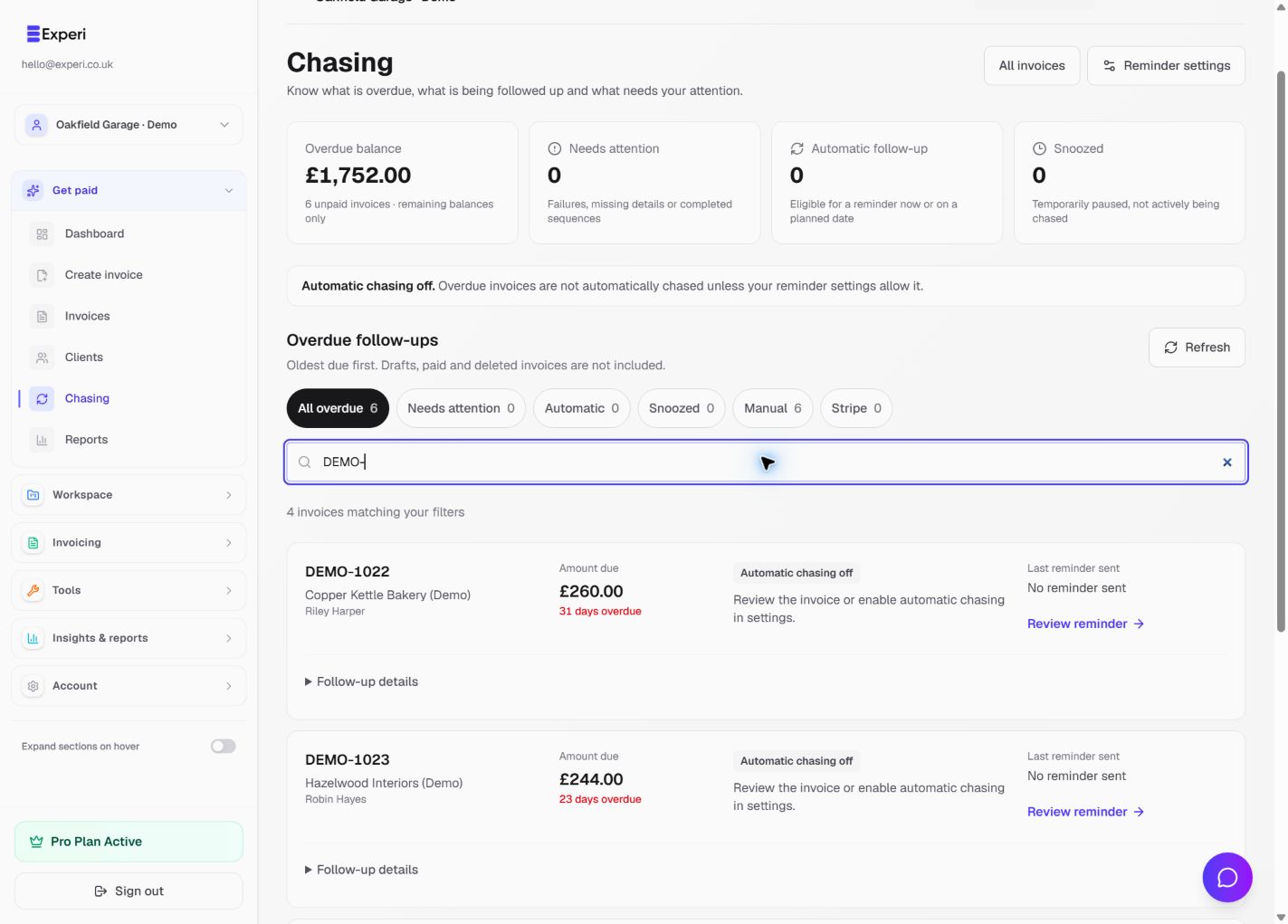
Use Chasing to check the balance and reminder history, then choose Escalate chasing on Pro. Keep reviewed letters, sending records and supporting documents with the invoice.
- Check that the invoice is still unpaid and review any dispute or payment received outside Experi. Opening Chasing does not send a reminder.
- Choose a payment reminder, final reminder or Letter Before Action. Edit the letter in Experi, check the recipient and applicable requirements, then approve a fixed copy to download as PDF or print.
- Arrange delivery yourself, record when and how you sent it, and upload proof of posting or correspondence. Recording sending does not post or email the letter.
Need the calculation first? Use the free late-payment calculator. Experi does not post letters, file claims or guarantee legal compliance.